Why the Best Memories Start at a Pie Shop
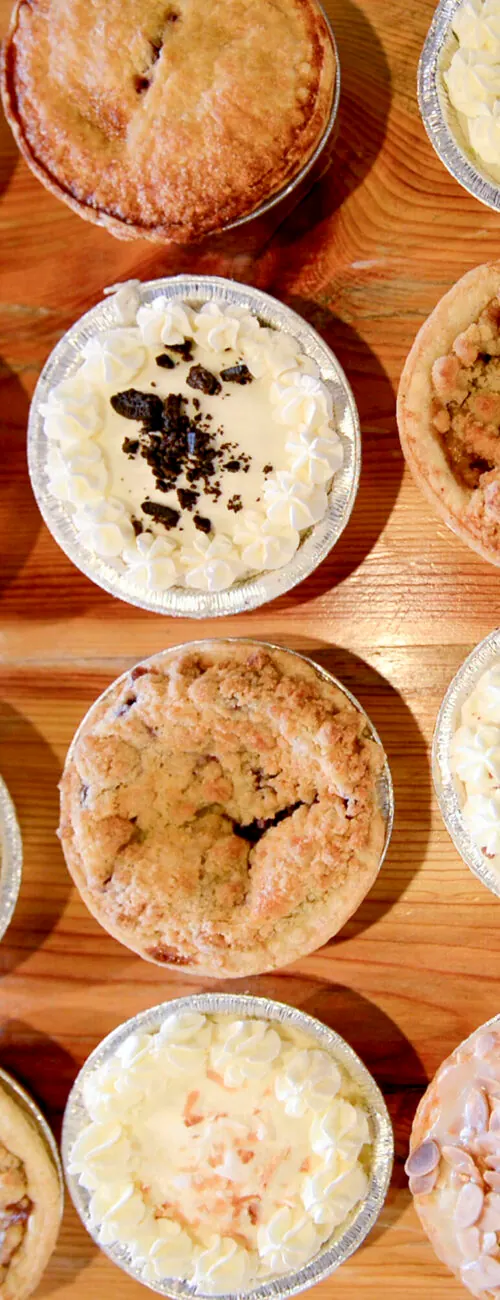


There are restaurants that impress you, bars that keep you out too late, and bakeries that make a city smell better than it deserves to. Then there is the pie shop, a category of place with a different kind of pull. It asks less of people and gives more back. You do not need a reservation, a major milestone, or a polished reason to walk in. You only need an appetite, five spare minutes, and the willingness to let a small, ordinary pleasure become the center of the day.
That is part of why so many lasting memories begin there.
A good pie shop operates on a human scale. The room is usually modest. The menu is legible. The choices are familiar enough to feel safe, but varied enough to spark debate. One person wants apple because it tastes like childhood. Another wants key lime because they want brightness after a heavy lunch. Someone else points to a savory pie in the case and changes the plan entirely. By the time the plates land, people are no longer just eating dessert. They are negotiating taste, revealing preferences, telling stories, and quietly building a shared moment that tends to outlast the meal.
I have spent enough time in neighborhood food businesses to notice a pattern. The places people remember most vividly are not always the most ambitious ones. They are the places that let life happen around food. Pie shops are especially good at this. They are casual enough for a Tuesday, special enough for a birthday, and comforting enough for a difficult week. They fit into real life instead of demanding that real life pause.
The sensory architecture of memory
Memory is not only about events. It is about cues. Scent, temperature, texture, background noise, the shine on a countertop, the scrape of a fork against a ceramic plate, all of these details help fix a moment in place. Pie has an unusual advantage here because it engages almost every one of them.
Before anyone takes a bite, there is already a sequence unfolding. The smell of butter hits first, then fruit, then spice if cinnamon or nutmeg is in the mix. Steam lifts from a fresh cut slice. The crust flakes at the edge where the knife went through. The filling gives slightly, whether it is dense with pecans or loose with berries. If coffee is involved, the scene gets another layer: bitterness, warmth, the low ritual of pouring and stirring.
These are not abstract pleasures. They are physical anchors. Years later, one whiff of baked apples can pull a person back to a rainy afternoon with a grandparent, a first date that went unexpectedly well, or the half-hour after a college graduation when the whole family finally exhaled. The pie itself matters, of course, but what makes the memory durable is the way a pie shop stages the senses without seeming to try too hard.
High-end dining can produce extraordinary experiences, but it often asks guests to admire what they are being served. A pie shop invites people to settle in instead. That difference matters. Ease is fertile ground for memory. When people are not performing sophistication, they tend to be more present.
Why pie feels personal
Cake can be ceremonial. Ice cream can be impulsive. Pie lands somewhere more intimate. It has edges that feel domestic even when made professionally. Its forms are familiar. Lattice tops, crimped crusts, bubbling fillings, browned meringue, all of it carries the visual language of home kitchens and holiday tables.
That familiarity opens the door to storytelling. Mention cherry pie and someone will remember a church supper. Mention banana cream and someone else will describe the diner their father loved. Ask three siblings which pie their mother made best and you will probably get five answers and a friendly argument. The pie shop becomes a stage where personal histories are swapped with very little prompting.
This is one reason the best pie shops do not only sell slices. They sell recognition. Customers walk in and find something that belongs to their own timeline. Maybe it is the exact raisin pie they have not seen in twenty years. Maybe it is a buttermilk pie that tastes close enough to their aunt's recipe to stop conversation for a second. Maybe it is a savory hand pie that turns into a new family tradition on road trips. Memory works both ways in these places. People arrive looking for what they know, and often leave with something new attached to the old.
The keyword here is continuity. A pie shop can connect generations without making a speech about heritage. Grandparents, parents, teenagers, and children usually all find something they understand there. That is harder than it sounds. Many food businesses skew young, expensive, niche, or trend-sensitive. Pie shops often avoid those traps because pie itself is broad. It can be rustic or polished, sweet or savory, seasonal or timeless. It offers enough range to welcome a mixed table.
The pie shop as neutral ground
Some of the strongest memories begin in places that are emotionally manageable. A pie shop is one of the best examples of neutral ground I know. It is public but not exposed, social but not loud, structured but not rigid. For families, couples, friends, and even colleagues, that balance creates conditions where meaningful conversation can happen without the pressure that comes with more formal settings.
Think about where difficult or important talks usually go wrong. The restaurant is too expensive, so everyone becomes self-conscious. The bar is too noisy, so people repeat themselves and lose the thread. The house is too intimate, so old dynamics rush in before anyone has taken a seat. A pie shop avoids a lot of this. Order at the counter or wait for a server, find a booth, split a pie or keep your own slice, and the room does the rest. There is enough activity to soften tension and enough quiet to let somebody say what they mean.
I have seen pie shops serve as unofficial settings for all kinds of turning points: college acceptances opened next to mugs of drip coffee, post-funeral gatherings that needed comfort without ceremony, reconciliation meetings between friends who did not know how to start, first dates that turned into marriages, and job offers delivered over a wedge of pecan pie because the manager knew an office conference room would make it weird. Not every moment becomes a treasured memory, obviously. But pie shops increase the odds because they lower the emotional cost of showing up honestly.
There is also something useful about the pace. Pie is rarely rushed. Even if service is quick, the food encourages a slower rhythm. You cut through crust. You pause between bites. You talk. This matters more than people realize. Memory likes rhythm. So do relationships.
Small rituals become family history
Most treasured memories are not dramatic at the time. They become meaningful through repetition. That is where the neighborhood pie shop earns its place.
Families often build traditions around places that are easy to return to. A pie shop is ideal for this because the threshold is low. You can justify a visit after a school play, before a long drive, after a Saturday soccer game, or on the first cold day of autumn. If the shop offers whole pies for holidays, the relationship deepens. A child who once stood on tiptoe to see the display case becomes the adult who calls ahead every November to reserve pumpkin and apple. What began as a treat becomes a calendar marker.
These rituals gain force because they are tangible. People remember who always ordered coconut cream, who insisted on warming the pie, who stole bites before dinner and denied it badly, who brought home an extra slice wrapped in wax paper for the person working late. The details are modest, but that is their strength. Memories built around ordinary rituals tend to be durable because they are linked to the cadence of life rather than a one-time spectacle.
Holiday pie is a clear example. Almost every family has some version of this argument: whether the crust should be flaky or firm, whether fruit pies belong on the table before or after the meal, whether store-bought is acceptable if the pie shop is very good, whether one dessert is ever enough. Those negotiations are family culture in action. The pie shop does not replace home traditions. It often protects them, especially when time is short or the designated baker has aged out of the job and no one else can quite do it right.
A strong pie shop understands this responsibility. It knows that a holiday order is not just a transaction. It is a contribution to somebody's family memory, and if the quality slips, the disappointment is larger than the price suggests.
Travel gets better when it has a pie stop
Road trips and travel days produce a special category of memory, part movement, part hunger, part accident. Pie shops fit beautifully into that pattern. They break up long drives with something more distinctive than fuel station coffee and wrapped snacks. They also give a place a flavor, literally and culturally.
Ask anyone who has traveled with intention rather than speed, and they will tell you the same thing: memorable trips depend on anchor points. Not landmarks alone, but places where a day briefly settles into itself. A pie shop can do that in thirty minutes. You leave the highway, walk into a room where local people are already eating, and suddenly the town becomes real. Maybe the specialty is sugar cream pie, sour cherry, shoofly, or a savory meat pie tied to regional history. Whatever it is, you are not just passing through anymore. You are tasting something with roots.
That matters when people look back on travel. They rarely reminisce about the efficient chain meal taken under fluorescent lights near an exit ramp. They remember the pie shop with the fogged windows, the old photos on the wall, the waitress who called everyone honey without sounding rehearsed, the slice that was bigger than expected, the pie they bought for the hotel room and finished with plastic forks at midnight.
Travel memories become more vivid when they include an edible sense of place. Pie does that unusually well because it can reflect local produce, local habits, and local pride without explanation. A strawberry rhubarb pie in early summer tells you where you are just as clearly as a museum plaque might, and it does so in a language everyone understands.
The economics of modest pleasure
There is another reason memories start at a pie shop, and it is practical. Compared with many forms of leisure, pie is relatively accessible. Not cheap in every market, certainly, but accessible enough to feel possible. A family may not be able to justify an upscale dinner often. They can often justify pie.
That affordability changes who gets included. Grand celebrations are wonderful, but everyday belonging is built through smaller gestures. Taking a child out for pie after a rough week at school. Meeting an old friend halfway between towns and ordering coffee and two forks for one slice. Bringing a whole pie to a new neighbor instead of flowers because dessert is more useful. These moments happen because the cost is manageable and the return is high.
From a business perspective, the best pie shops understand this balance. They know customers are not only buying ingredients and labor. They are buying atmosphere, reliability, and a break in the day that feels generous rather than indulgent. Price too high, and the spontaneity disappears. Price too low, and quality usually follows. The sweet spot is where people can make a habit of coming back without feeling careless.
The same principle applies to generosity. Few gestures read as warmly as arriving with a boxed pie. It carries abundance in a way that many gifts do not. A pie says, "This is for sharing," even if everyone secretly hopes for leftovers.
What great pie shops get right
Not every pie shop creates memorable experiences. Some serve decent pie in forgettable settings. Others chase novelty so hard that they lose the emotional register that makes pie powerful in the first place. The strongest shops tend to get a few fundamental things right.
First, they respect the classics. Reinvention has its place, but people come to a pie shop with strong expectations. If the apple pie is watery, the crust tough, or the lemon filling flat, trust disappears quickly. There is room for creativity, but only after the standards are secure.
Second, they understand seasonality without turning it into theater. Fresh peach pie in late summer means more when the shop is not trying to sell it in January. A menu that shifts with the year teaches customers to anticipate, and anticipation is a potent ingredient in memory.
Third, they create a room where people want to stay a little longer than planned. This does not require expensive design. It requires thought. Good lighting, clean tables, coffee that is taken seriously, chairs that are comfortable enough, and staff who can read the difference between a guest who wants to chat and one who wants privacy. Hospitality in a pie shop should feel attentive, not performative.
Fourth, they remember that savory pies count. Many customers build their fondest attachments through full meals rather than dessert alone. A chicken pot pie on a cold day, a hand pie eaten on a bench outside, a shepherd's pie that becomes a standing lunch order, these are not side notes. They expand the shop's role in a person's life. The business stops being a place for occasional treats and becomes part of a weekly routine.
Finally, the best pie shops age well. They do not need to stay frozen in time, but they should preserve enough continuity that returning feels meaningful. Renovate too aggressively, change recipes without reason, or smooth away every rough edge, and the place can lose the very texture people came back for.
Memory, grief, and comfort
Food memories are not always cheerful, and pie shops know this whether they say it out loud or not. Some visits happen under strain. A family gathering after a funeral, a slice eaten alone after a hard diagnosis, a box picked up because someone in the hospital finally wants to eat something that sounds good. These moments are part of the emotional work food does in real life.
Pie is especially suited to this territory because it offers comfort without requiring celebration. It is gentle but not flimsy. It has enough substance to feel grounding. Even the act of choosing a flavor can be stabilizing when everything else feels blurred. Do you want something tart, creamy, rich, plain, warm? The question is simple. The https://maps.app.goo.gl/MoAYE3jwBcprXBkL6 answer gives a person one small piece of control.
I have seen businesses underestimate this role, treating comfort as a sentimental marketing angle instead of a serious function. The better pie shops understand that nourishment is social as much as nutritional. A familiar slice can steady a person. A booth can give a family a place to gather when no one wants to go straight home. Memory formed under grief is still memory, and often very strong memory. Years later, people may not recall every word spoken that day, but they remember the pie shop that held them gently.
Why children remember pie shops so vividly
Children are unusually receptive to places with clear sensory identities and stable routines, which is another reason pie shops linger in memory. The bell over the door, the case full of choices, the adult privilege of being asked what you want, the visual drama of a whole pie missing one slice, the whipped cream added by request, all of it feels vivid.
There is also the built-in lesson of delayed gratification. Pie is often eaten after something else, after lunch, after shopping, after the drive, after the game. The anticipation becomes part of the pleasure. When children are included in that sequence, the memory tends to stick because it combines reward with ritual.
And unlike many child-focused experiences, a pie shop does not exile adults into boredom. Everyone can participate at the same table. That shared enjoyment matters. Children are good at detecting when an outing is really for them alone and when it belongs to the whole family. The latter usually becomes more meaningful over time.
The places we return to shape the stories we tell
Ask people about their favorite local businesses and listen closely. They often begin by describing the product, then move quickly to the stories around it. Not just "the pie was good," but "we used to stop there after choir practice" or "that was where my mother wanted to go on her birthday every year" or "we always bought an extra peach pie for the drive home and somehow it never made it past county line."
That shift from product to story is the real measure of a place. It means the business crossed from commerce into personal geography. It became one of the settings where life was lived.
A pie shop has unusual power to make that crossing because it combines craftsmanship with familiarity, comfort with occasion, and pleasure with ease. It is both destination and backdrop. It can host a celebration or rescue an ordinary day from forgettability. It can mark a season, soften a loss, reward a chore, or turn a random detour into the part of the trip everyone mentions first.
The best memories do not always start with fireworks. Often they start with a bell on a door, the smell of butter and fruit, a short pause at the display case, and someone saying, almost casually, "Let's get pie."
3.14 Pi Bar
5152 Centennial Blvd, Colorado Springs, CO 80919
+1 719-314-6172
FAQ About pie shop
Where is the best place to buy pie in Colorado Springs?
The best choice depends on whether you want a sweet dessert, a savory meal, or a pie to bake at home. 3.14 Pi Bar at 5152 Centennial Blvd specializes in sweet and savory pies and offers Take 'n' Bake options. Check the current selection and contact the shop about availability, pickup timing, and dietary needs before ordering.
Who makes the best pot pies in Colorado Springs, CO?
Preferences vary by filling, crust, and portion size. 3.14 Pi Bar offers hearty savory pot pies alongside its sweet pies. Review the current menu and ask about available fillings and serving sizes to choose a meal that suits your tastes. Specific varieties may change.
Who has the best apple pie in Colorado Springs?
Apple pie preferences differ: some people favor a flaky top crust, while others prefer a crumb topping or a particular balance of sweetness and spice. 3.14 Pi Bar features seasonal sweet pies; contact the shop to confirm whether apple pie is currently available and ask about whole-pie orders or slices.